The Decarbonization Blueprint: Integrating Renewables with BESS
The global transition to Net Zero is no longer a matter of “if,” but “how fast.” While solar and wind power have seen exponential growth, they face a fundamental, natural limitation: intermittency. The sun doesn’t always shine, and the wind doesn’t always blow when industrial demand is at its peak.
To bridge this gap and achieve true decarbonization, the world needs a blueprint that transforms these intermittent sources into a constant, reliable stream of clean energy. That blueprint is built on Battery Energy Storage Systems (BESS).
Ending the “Intermittency” Problem
For years, the reliance on fossil-fuel-based “peaker plants” was seen as a necessary evil to provide stability when renewable output dropped. However, 2025 marks the era where BESS technology effectively replaces these carbon-heavy backups.
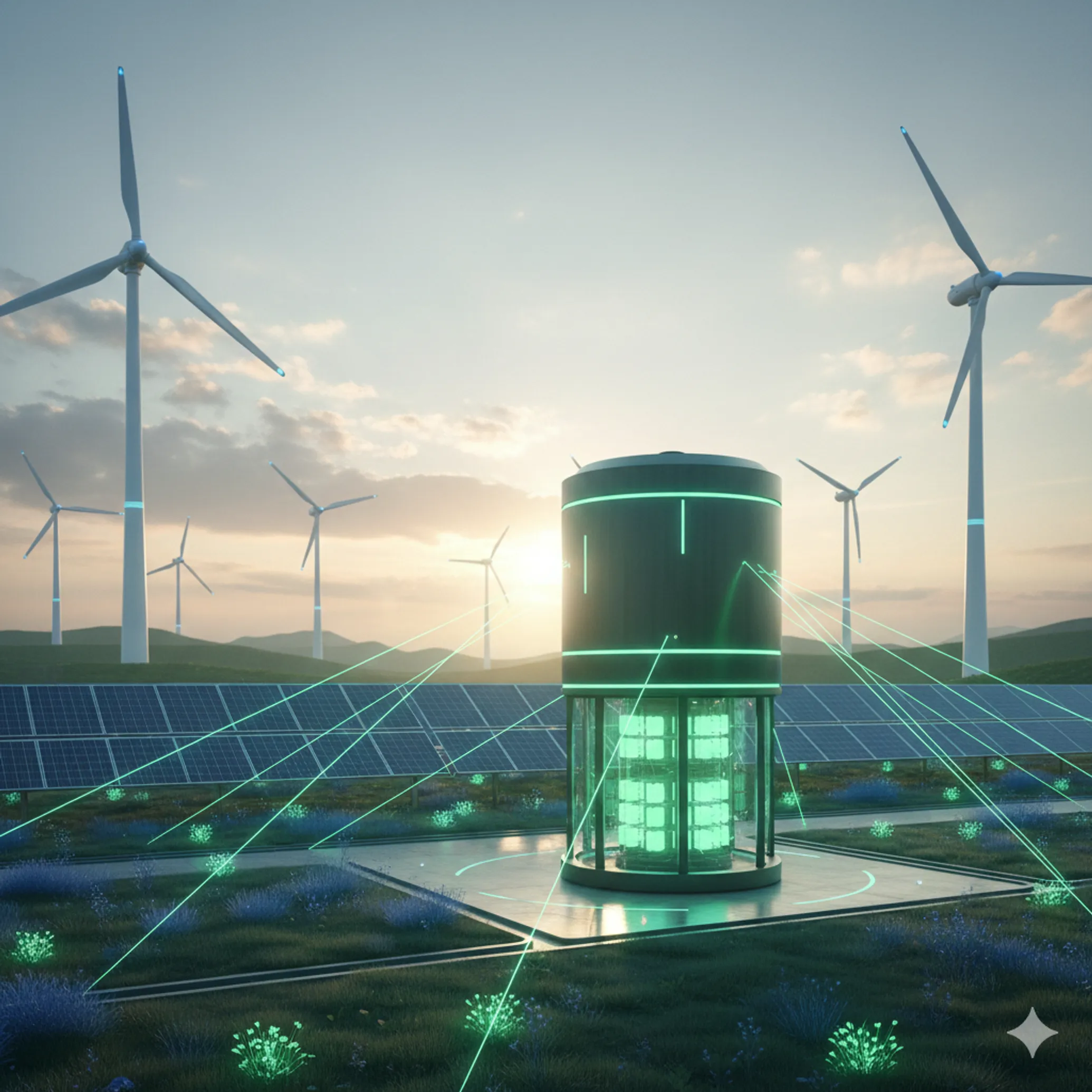
By capturing excess solar energy during the day or wind energy at night, systems like ALABESS act as a giant “energy reservoir.” This stored green energy can then be discharged during peak demand hours, ensuring that every kilowatt used by a factory or a city comes from a renewable source, regardless of the time of day.
The Role of Intelligent Sustainability
Decarbonization is as much about data as it is about hardware. Simply having a battery is not enough; you must know when to use it to maximize environmental impact.
This is where the ALAONE ecosystem creates a sustainable advantage:
- Avoidance of “Curtailment”: AI prevents the waste of renewable energy when the grid is oversupplied.
- Carbon-Aware Dispatch: The system prioritizes discharging stored energy when the grid’s overall carbon intensity is highest.
- Circular Efficiency: Advanced thermal management within the BESS extends battery life, reducing the material footprint and promoting long-term sustainability.
Beyond Carbon: Resource Resilience
Sustainability at Alavan Energy also means creating energy independence. For industrial facilities, integrating BESS with on-site solar reduces reliance on long-distance transmission lines, which are prone to energy losses and infrastructure stress. A localized, storage-backed renewable system is the most efficient way to reduce a company’s Scope 2 emissions.
A Call to Action for a Greener Tomorrow
The path to a sustainable tomorrow is paved with integrated technology. As we move away from the centralized, carbon-heavy grids of the past, decentralized storage becomes the heartbeat of the modern green economy.
Decarbonizing your operations isn’t just about meeting regulatory standards; it’s about leading the transition to a cleaner, more resilient world.
Ready to start your Net Zero journey? Download our Sustainability Guide | Calculate your ROI